Rethinking Matthew 7:21-23: What Did Jesus Mean?
What’s the point of this Christian walk, if there’s a possibility it could all be in vain? But what if I told you you’ve probably misunderstood this passage and that Jesus was not trying to stir up fear in believers but rather the self-righteous.
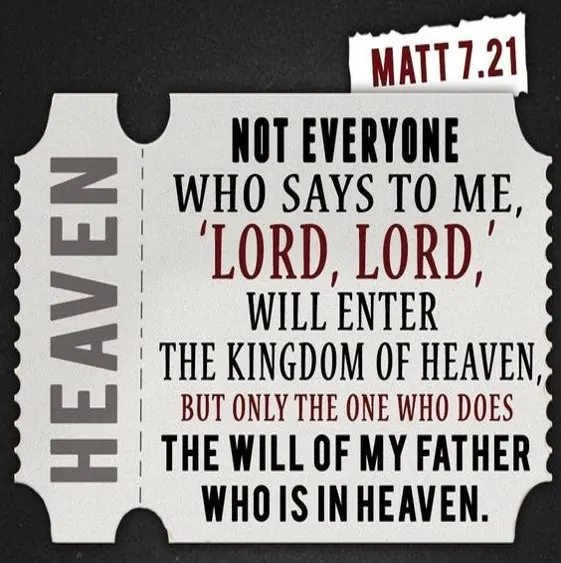
Matthew 7:21-23 (CSB)
21 “Not everyone who says to me, ‘Lord, Lord,’ will enter the kingdom of heaven, but only the one who does the will of my Father in heaven. 22 On that day many will say to me, ‘Lord, Lord, didn’t we prophesy in your name, drive out demons in your name, and do many miracles in your name?’ 23 Then I will announce to them, ‘I never knew you. Depart from me, you lawbreakers!’[a][b]
Growing up in church, this passage of Scripture always frightened me. I did not like that it was included in the pages of Scripture to be quite frank. The idea that I could live my entire life thinking I was a true believer, only for Jesus to tell me “I never knew you”. For several years, passages like this left me in a pit of despair that I couldn’t pull myself out of. What’s the point of this Christian walk, if there’s a possibility it could all be in vain? But what if I told you, you’ve probably misunderstood this passage and that Jesus was not trying to stir up fear in believers but rather call out the self-righteous.
A key principle in understanding Scripture is ‘Scripture interprets Scripture’ and this principle is vital in understanding this passage.
To properly understand this passage a couple questions have to be considered:
1. What did they believe was their justification for entry into heaven?
2. What is the ‘will of my Father’?
3. Why did Jesus call them lawbreakers?
1. What did they believe was their justification for entry into heaven?
The professors of faith point to their works (Romans 3:20) as their basis of justification instead of the finished work of Christ of the cross (John 19:30), for the full payment of their sin that is freely(Isaiah 55:1) offered to all (John 3:16). Salvation is by faith alone through grace alone in Christ alone apart from works (Ephesians 2:8-9). No one will ever enter heaven based on their own good works (Isaiah 64:6).
2. What is the ‘will of my Father’?
When Jesus says, “but only the one who does the will of my Father in heaven”, many have interpreted this as obedience to God’s commands. However, if that were true, then nothing less than total obedience would be required. And that’s highly problematic because no one except Jesus is sinless, so we’d all be condemned Romans 3:23.
As I said earlier, Scripture interprets Scripture, and this principle helps us find the true meaning of “the will of my Father” found in John 6:40.
John 6:40 (CSB)
40 “For this is the will of my Father: that everyone who sees the Son and believes in him will have eternal life, and I will raise him up on the last day.”
The will of the Father is not that we do something for Him, but simply that we believe in His Son.
3. Why did Jesus call them lawbreakers?
These professors did many mighty works, yet they are still called lawbreakers. All their good works still couldn’t justify them in the sight of God. James 2:10 says, “Whoever keeps the law yet stumbles at just one point is guilty of breaking all of it.” Moreover, in Romans 14:23, Paul says, “Whatever is not from faith is sin.” Hence, these professors of faith are guilty of sin because their good works didn’t come from faith in Jesus.
John 3:16 (CSB)
For God loved the world in this way: He gave his one and only Son, so that everyone who believes in him will not perish but have eternal life.
If you’re trusting in Christ alone for your salvation, you can rest assured that you will be known by Him on the Day of Judgment.

I'm a Christian who's passionate about the Bible, studying theology and helping others find rest in Christ.
Hook this up to your favourite commenting platform — Giscus, Disqus, or your own.